
Meet the instructor
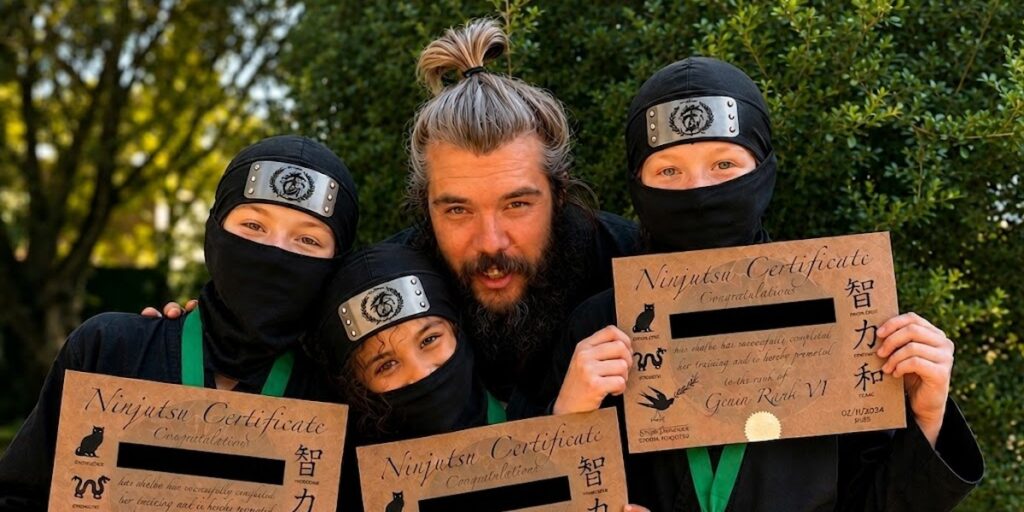

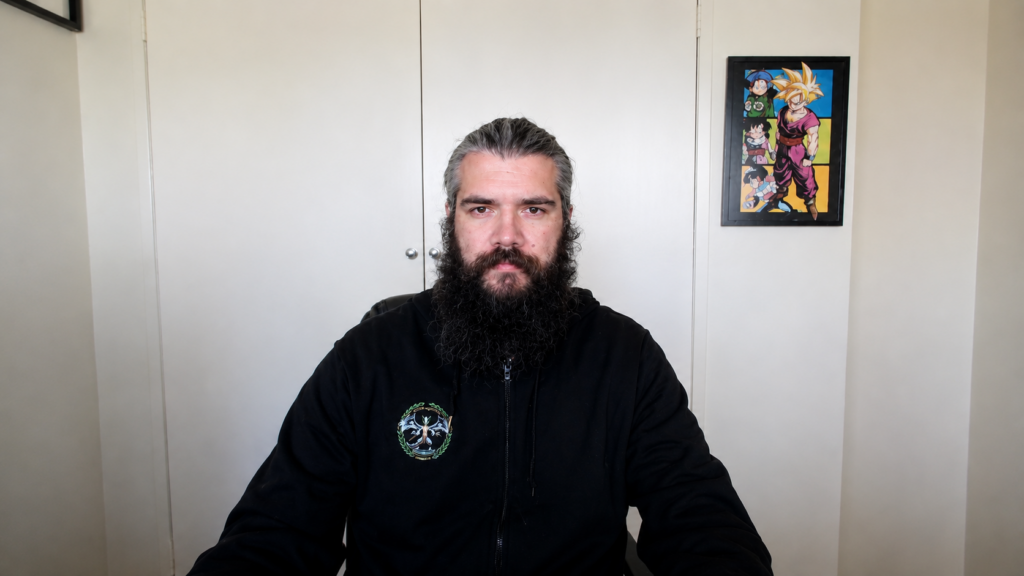
I’m the founder and Head Instructor of Divine Dragon Ninjutsu.
My approach to teaching has been shaped by more than martial arts alone. Ninjutsu provided the foundation, while experiences in movement, teaching and life have influenced how I understand students, how I communicate and how I approach training.
I believe an instructor’s role is not simply to demonstrate techniques, but to help each student understand what they are learning, why it works and how it can be adapted to them.
DDN is the result of that journey — built on what I was taught, shaped by what I have learned, and continually refined through experience.
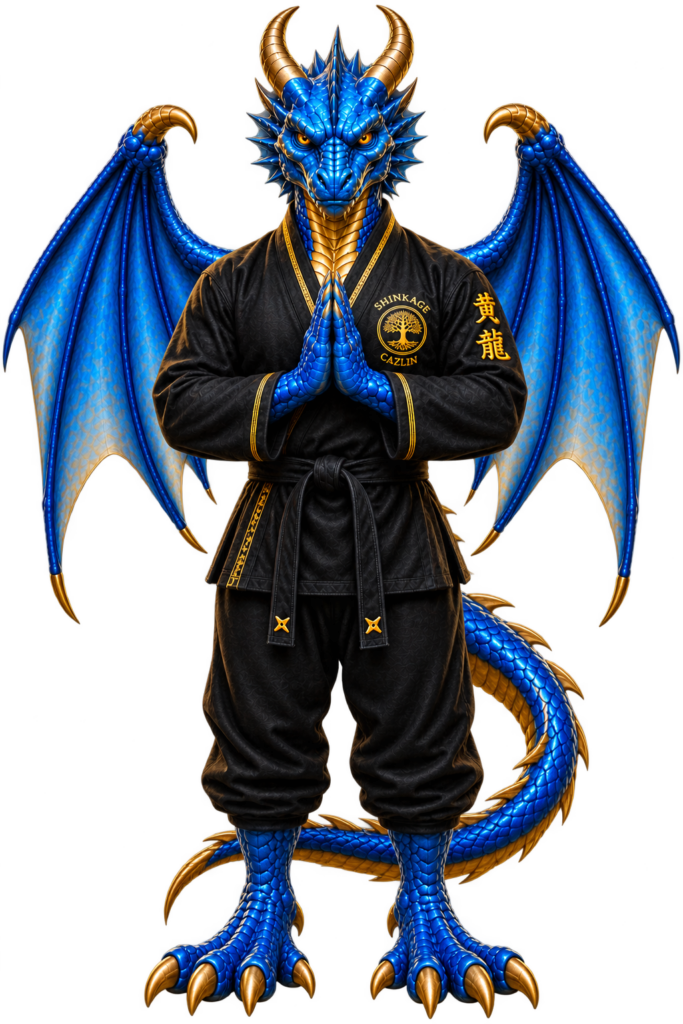
If you spend any time following DDN online, there is another character you will soon meet along the way.
Shinkage Cazlin is DDN’s digital Shinobi — the character who represents Divine Dragon Ninjutsu across our social media and online presence.
But Cazlin was never created simply to be a mascot.
His name and character are also a dedication to a late friend of mine, giving something deeply personal a place within something I am building for the future.
Through Cazlin, DDN can tell stories, share lessons, explore martial arts history and culture, have a little fun, and communicate in a way that feels distinctly our own.
The dragon is the symbol of DDN. Shinkage Cazlin is its voice in the digital world.
MY MARTIAL ARTS JOURNEY
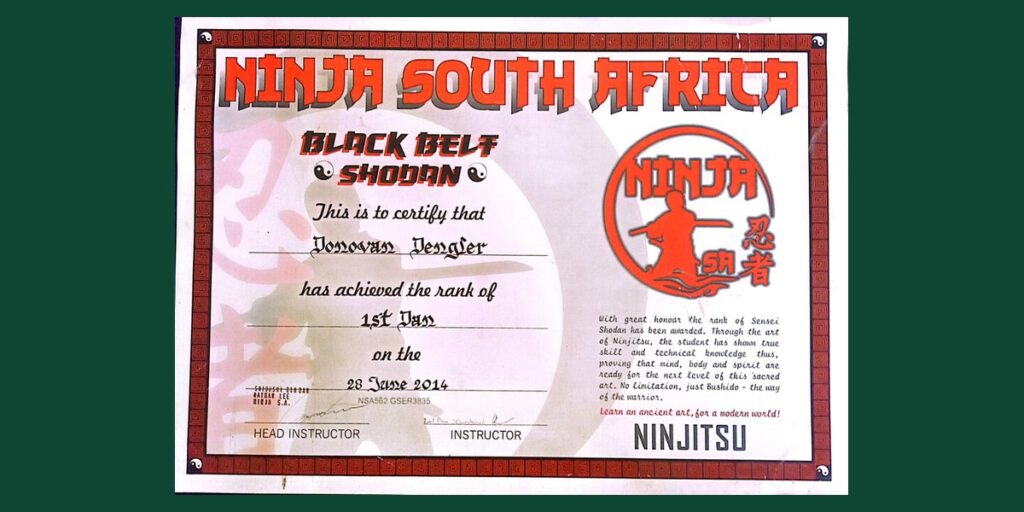
My formal Ninjutsu journey began around 2011, when I discovered Ninja SA while searching online for somewhere to train.
What began as curiosity quickly became something I wanted to pursue seriously. Under the guidance of Shidoshi Nathan Lee, together with Sensei Shaun and other instructors who contributed to my development, I progressed through the ranks and earned my 1st Dan black belt in 2014.
Those years gave me the foundation upon which my own journey would continue — not only in technique, but in how I understood martial arts, training and teaching.
Earning my black belt was an achievement — but it was never the end of my training.
Earning my black belt gave me a foundation, but experience continued to change the way I understood martial arts.
As I continued training and began working with students, I became increasingly interested in the principles behind techniques rather than simply repeating movements exactly as I had learned them.
People are different. Their height, strength, mobility, confidence and circumstances are different. A technique that works well for one person may need to be adjusted for another. Teaching made me think more deeply about those differences and about how martial arts could remain practical without losing the lessons on which it was built.
Over time, experiences both inside and outside martial arts would continue to influence how I moved, how I taught and how I understood training.
Those different influences eventually became part of the approach I would bring to DDN.
BEYOND THE BLACK BELT
My martial arts foundation comes from Ninjutsu. It gave me the techniques, principles and experiences upon which my own journey was built.
I respect that foundation while encouraging students to understand why something works and when a different approach may be needed.
The foundation remains — but the learning never stops.
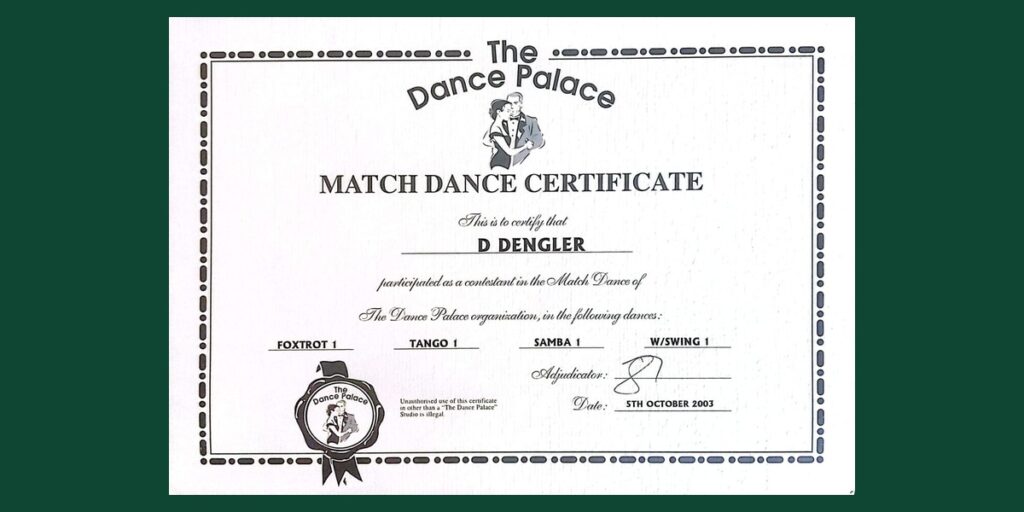
Training in Ballroom and Latin American dance gave me a different understanding of balance, rhythm, timing, coordination and footwork.
It taught me to look at how the body moves, rather than focusing only on the technique being performed.
Understanding movement helps us develop technique.
Teaching English as a foreign language reinforced an important lesson: knowing something does not automatically mean knowing how to teach it.
Students learn differently, so an instructor must be willing to explain, demonstrate and adapt.
Good teaching adapts to the student.
My interest in martial arts history and culture encourages me to explore where techniques and traditions came from and how they developed.
Understanding that history helps me separate tradition, evidence and the stories that have grown around martial arts.
Understanding the past helps inform how we train today.